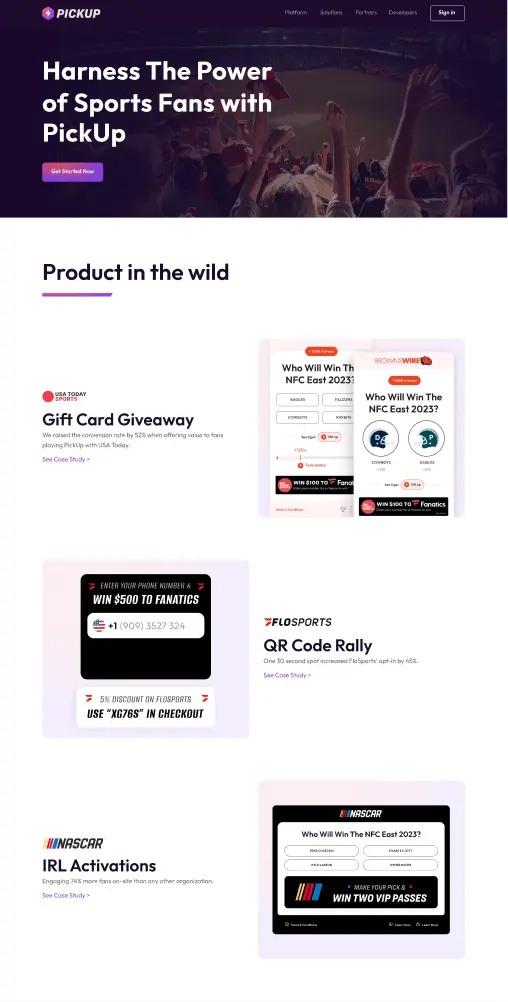
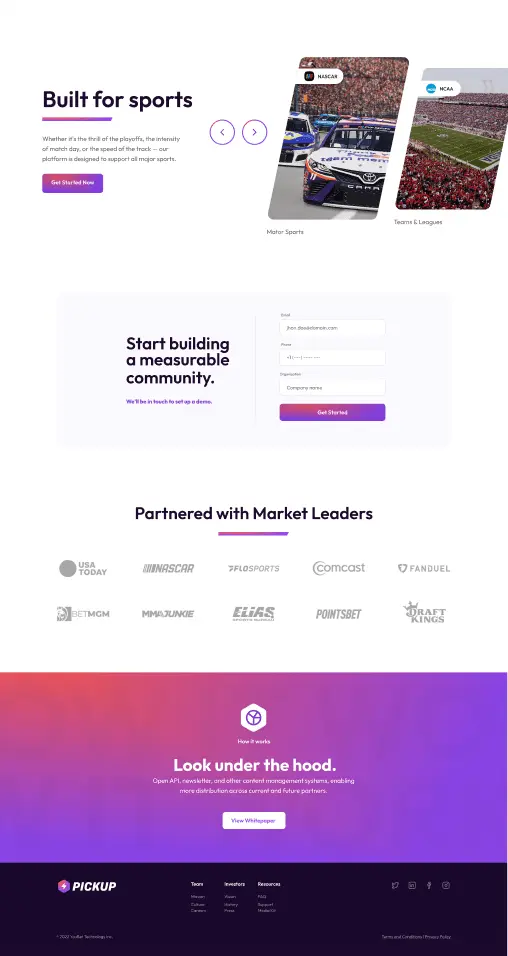
Creating a clean and modern website for fan growth and ROI
Pickup is a digital sports engagement tool, essentially a widget that publishers and sports media platforms embed in articles or pages. It lets users make quick, interactive picks (predictions) on sports events.

Problem
Pickup needed a clear and modern website to introduce its sports prediction widget to potential investors and users for the first time. Since this was the initial public explanation of the product, the challenge was to communicate what the widget does, how it works, and why it is valuable in a clear and concise manner. The goal was to present a technical tool in an intuitive and engaging format, allowing visitors to quickly understand the experience of making fast and fun sports picks within publisher content.
Timeline
3 months
Services
Web Design
Visual Design
Team
Stakeholders
Project Manager
1 Designer
1 Developer
Role
Sr. UX/UI Designer
Goals
As a team we defined clear goals focused on improving the visual design, usability, experience and interaction.
Show the value of the product to potential investors
Build trust through a professional look and a clear structure
Explain what the Pickup widget is and how it works
Create a foundation that the client can expand later as the widget grows
Highlight the main benefits for publishers, users and partners
Outcome
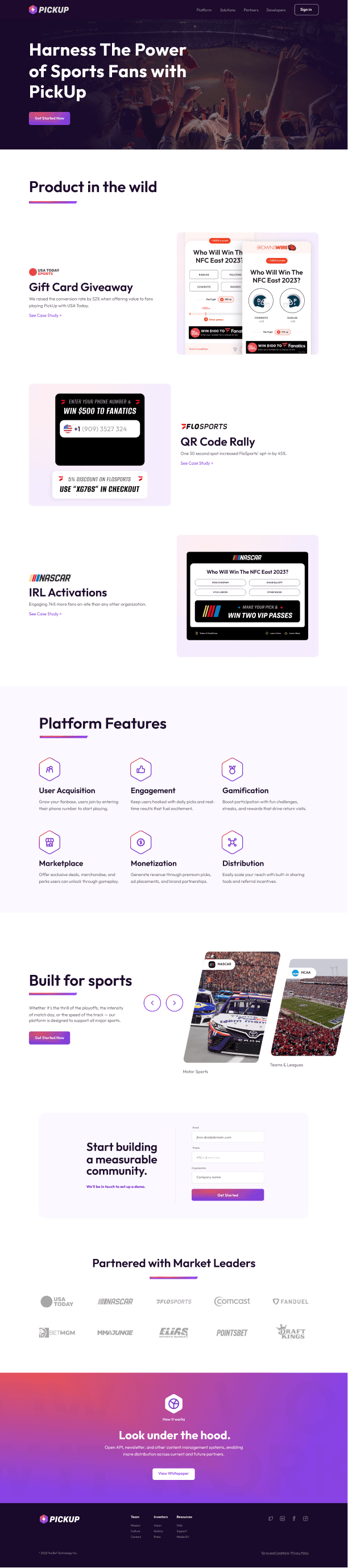
The redesign focused on creating a clear and engaging website that highlights PickUp’s capabilities, use cases and business value. We improved the structure, simplified the messaging and refined the visual hierarchy so visitors can understand the product within seconds. The result is a more polished, credible and persuasive site that supports sales conversations, strengthens brand trust and better communicates the power of PickUp in the sports media landscape.
Wireframing and UI design work
After several meetings and workshops, the client provided the content and requirements for the website, along with initial visual ideas and a list of competitors. Several content blocks would be reused across multiple pages, with the main goal being to clearly communicate the widget’s capabilities and benefits to potential investors.
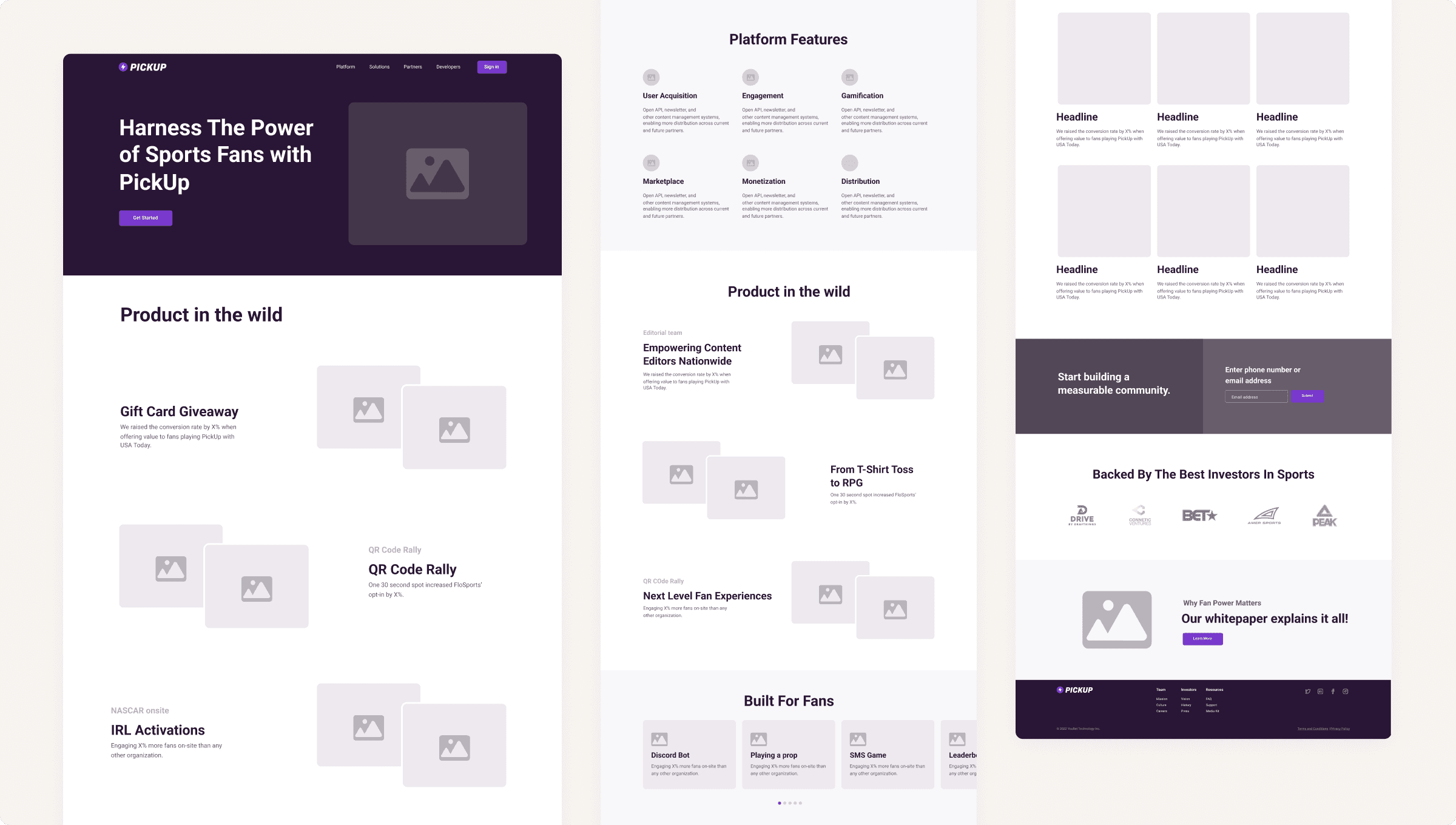
Wireframes
For the wireframes, the primary focus was on structuring the content in a way that created a clear and logical flow while remaining dynamic and consistent throughout the entire website. Special attention was given to layout decisions that improved readability, clarity, and ease of scanning across pages.
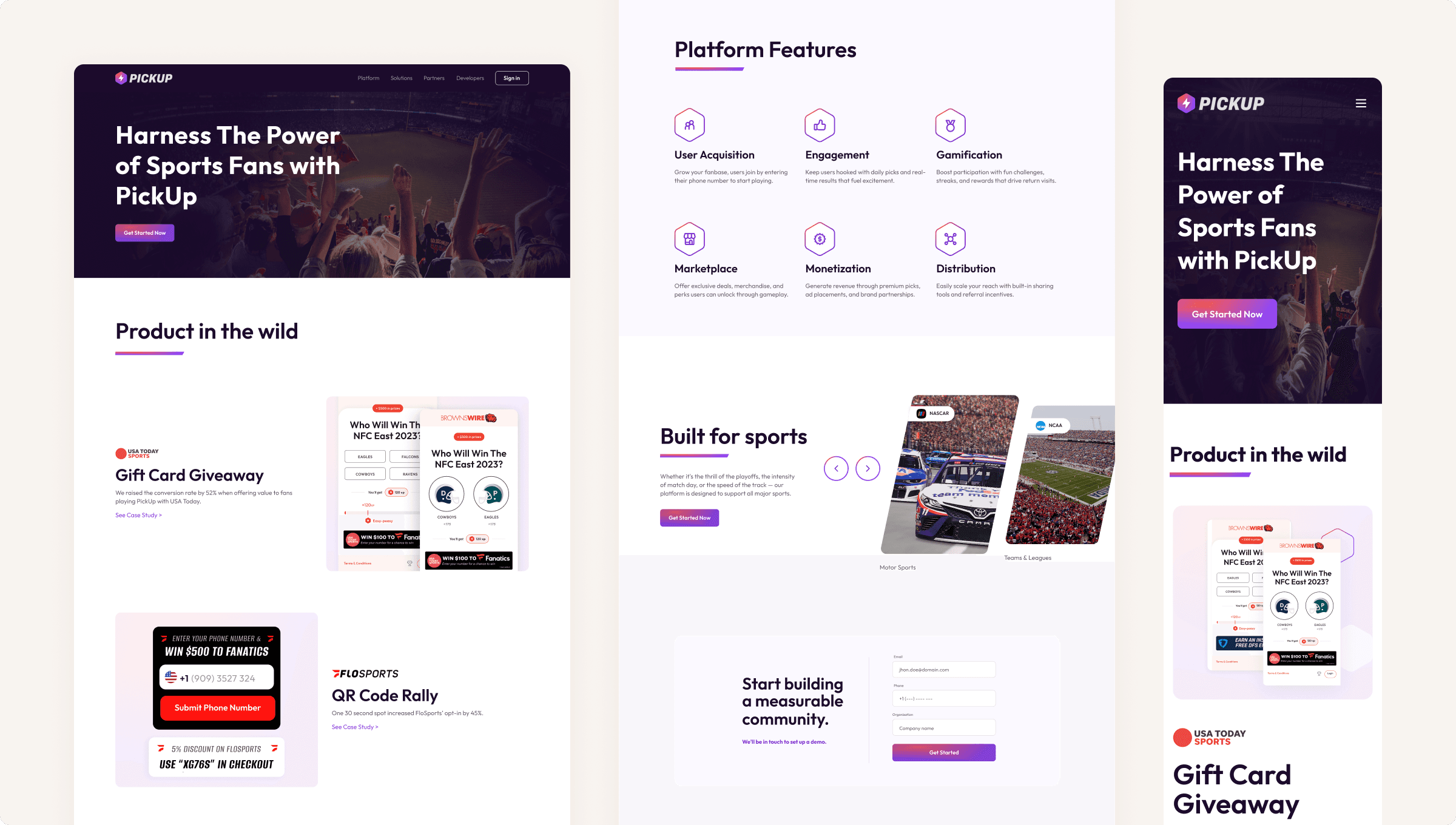
Homepage design
For the homepage, the main objective was to clearly communicate the value proposition of the Pickup sport widget, highlighting its key features and benefits, as well as showcasing case studies to reinforce credibility and trust with both users and investors. The design needed to convey strength and performance while staying aligned with the brand identity, ensuring visual consistency and coherence across the experience.
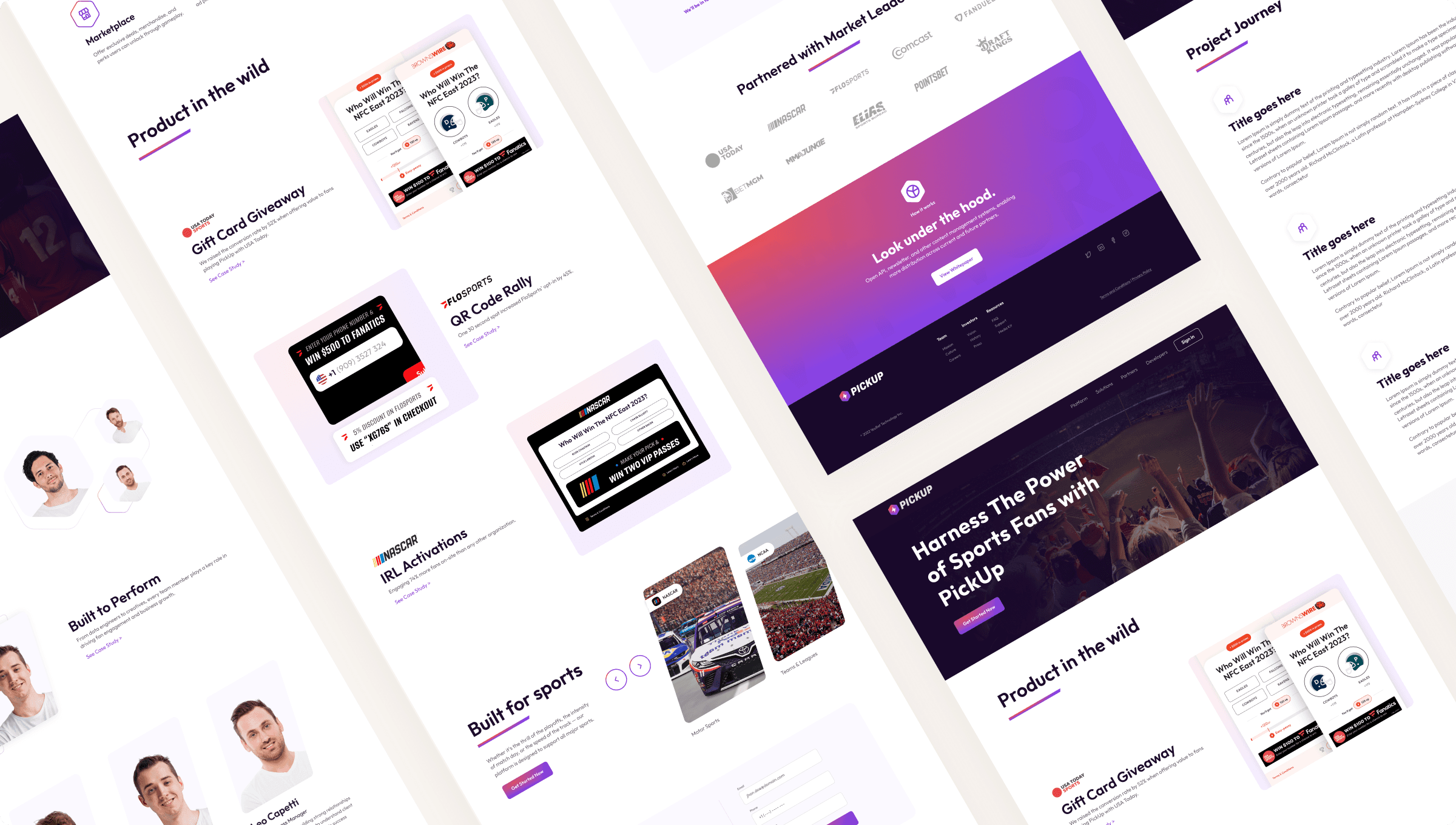
Inner pages
After the homepage was approved, we moved on to designing the inner pages. The result was a harmonious and clean UI that is easy to navigate, with clear coherence between branding, layout, and content across the entire website.
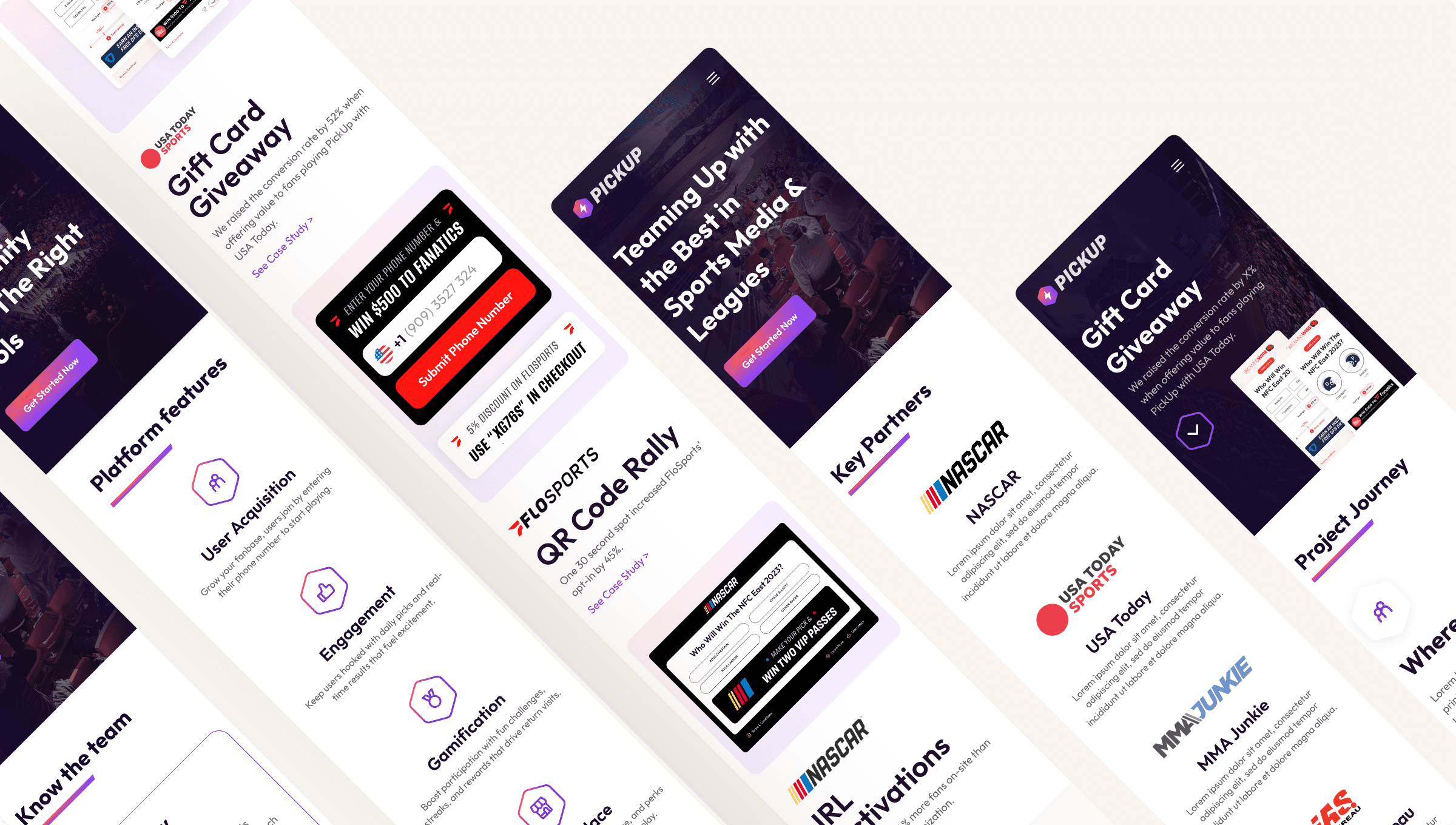
Responsive design
For the responsive versions, the focus was on preserving the same clarity, hierarchy, and visual consistency across all screen sizes. Layouts and components were carefully adapted to ensure the experience remained intuitive, readable, and aligned with the brand,.
Key Takeaways
The redesign showed how clarifying the UI and information structure can significantly improve usability and credibility, especially for a product facing investor skepticism and internal uncertainty. By simplifying the interface and aligning visual elements with a clear hierarchy, the platform became easier to understand and more confident in how it presented its value.
The updated UI was well received by users, the internal team, and early investors, helping reposition Pickup during a post-pandemic phase when the company was exploring how to restart amid cashflow challenges. This project reinforced that clean, well-structured UI is not just about aesthetics, but a strategic tool for building trust, improving perception, and supporting product recovery efforts.
Similar projects
This was one project, there is more!
See how I’ve helped other teams improve their product experience through design.